
- News Center
Event news
AALD News
AALD News
Co-organized by AALD | Inauguration of the Multi-Sensory Landscape Task Force of the Chinese Society of Landscape Architecture & 2026 Multi-Sensory Landscape Academic Symposium
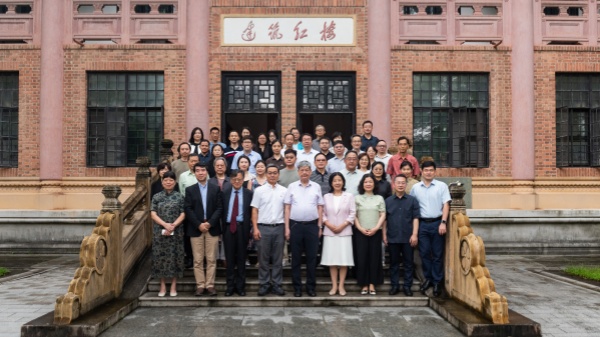
From July 16 to 17, 2026, the above symposium took place in the Red Building of Architecture on the Wushan Campus of South China University of Technology (SCUT). Supervised by the Chinese Society of Landscape Architecture, the event was jointly hosted by the School of Architecture of SCUT and the State Key Laboratory of Subtropical Building and Urban Science, with Xitong Lighting, SWA Group Design (Shanshan Bide) and AALD serving as co-organizers.
The conference brought together a roster of top domestic and international scholars, featuring distinguished guests including Wu Shuoxian, Member of the Chinese Academy of Sciences; Kang Jian, Foreign Member of the Chinese Academy of Engineering; Gao Weijun, Foreign Member of the Japan Academy of Engineering; Duan Jin, Member of the Chinese Academy of Sciences; and Li Rusheng, Chairman of the Chinese Society of Landscape Architecture. Professor Yan Yonghong, President of AALD, Doctoral Supervisor and Professor at the School of Architecture, Chongqing University, also attended upon invitation.
Rooted in the human settlement theory of "three landscapes of sound, scent and light plus multi-sensory landscapes" pioneered by Academician Wu Shuoxian, the conference built an interdisciplinary academic exchange platform featuring deep integration of industry, academia and research. It assembled experts, scholars and industry representatives nationwide spanning landscape architecture, architecture, acoustics, lighting, artificial intelligence and other fields, to jointly explore innovative theories for multi-sensory landscapes and new pathways for high-quality development of human living environments.
Inaugural Meeting of the Multi-Sensory Landscape Task Force
On the afternoon of July 16, the first working meeting of the Multi-Sensory Landscape Task Force under the Chinese Society of Landscape Architecture was convened. The session was attended by Academicians Wu Shuoxian, Kang Jian and Gao Weijun, Chairman Li Rusheng, Peng Changxin, Dean of the SCUT School of Architecture, together with 41 experts and scholars from domestic and overseas universities, research institutes and enterprises. Bian Dongyu, Deputy Secretary-General of the Society, chaired the meeting.
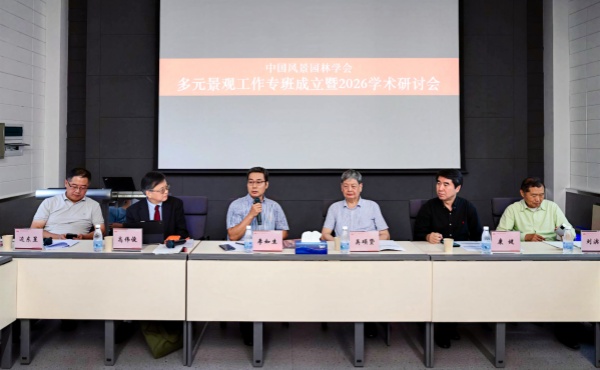
Participants held in-depth discussions covering the Task Force’s founding background, academic positioning, core priorities and operational mechanisms. The Task Force aims to consolidate research resources for soundscapes, lightscapes, scentscapes and integrated multi-sensory landscapes, and drive profound interdisciplinary collaboration with architectural planning, ecological environment, neuroscience, psychology, general health and other sectors.
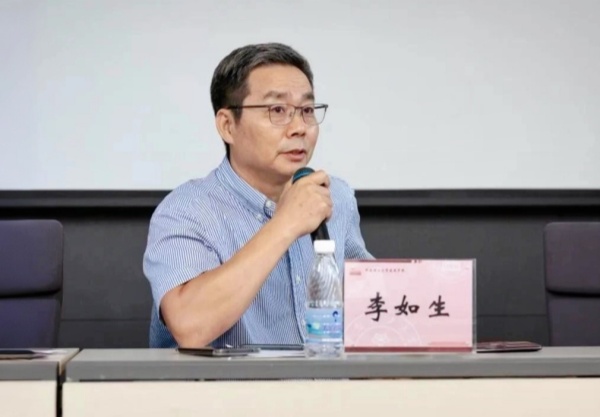
Chairman Li Rusheng remarked that landscape architecture as a discipline and industry is facing a new developmental landscape, making the establishment of the Task Force perfectly timed. It opens new avenues for disciplinary integrated innovation and industrial transformation. Research on multi-sensory landscapes must leverage professional strengths to serve public wellbeing, delivering solid research outcomes to meet people’s aspirations. It shall proactively align with national strategies including urban renewal, Beautiful China Initiative and Healthy China Initiative, explore novel scenarios, industrial formats and service models, and distill China’s unique wisdom with global influence.
All participating experts reached a consensus that the Task Force constitutes a pivotal platform for in-depth collaboration across multiple disciplines and institutions. Moving forward, the Task Force will refine its organizational structure and carry out heritage surveys of the "three landscapes" — traditional blocks, urban parks and classical gardens — on a regional basis. It will further advance theoretical system research, compile technical guidelines and blue papers, and build databases of experts, enterprises, case studies and research materials. Regular academic forums, science popularization and technical training sessions, and demonstration project selections will be organized to lay a solid foundation for the establishment of a dedicated academic branch.
2026 Multi-Sensory Landscape Academic Symposium
The 2026 Multi-Sensory Landscape Academic Symposium officially kicked off on July 17, consisting of three segments: opening ceremony, keynote speeches by academicians, and themed roundtable forums. Ye Zhifeng, Party Secretary of the SCUT School of Architecture and the State Key Laboratory of Subtropical Building and Urban Science, and Guo Jianhua, Second-Level Inspector of the Department of Housing and Urban-Rural Development of Guangdong Province, delivered speeches at the opening ceremony.
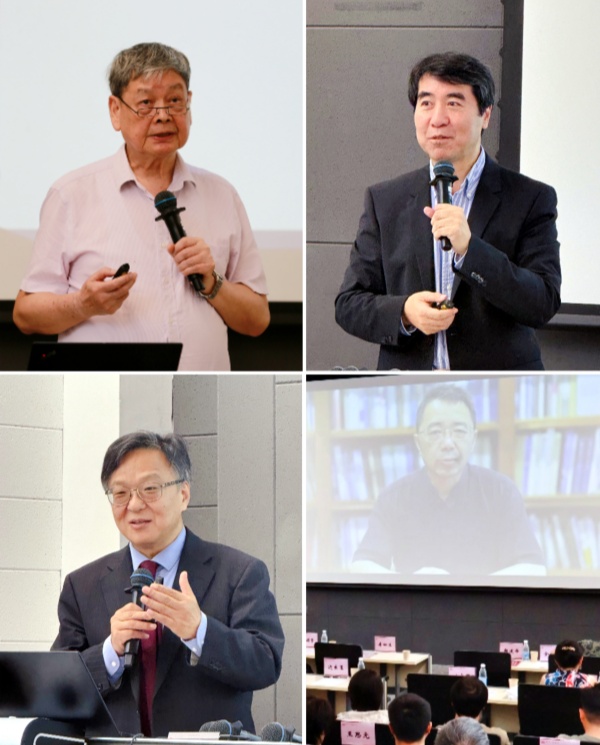
During the keynote session, Academicians Wu Shuoxian, Kang Jian, Gao Weijun and Duan Jin delivered outstanding presentations respectively focusing on theories of multi-sensory landscape creation, soundscape index (SSID), green building perception, and multi-scenario shaping of historic districts. Covering theoretical construction, technical methodologies and practical cases, their addresses provided systematic theoretical support for the academic framework of multi-sensory landscapes.
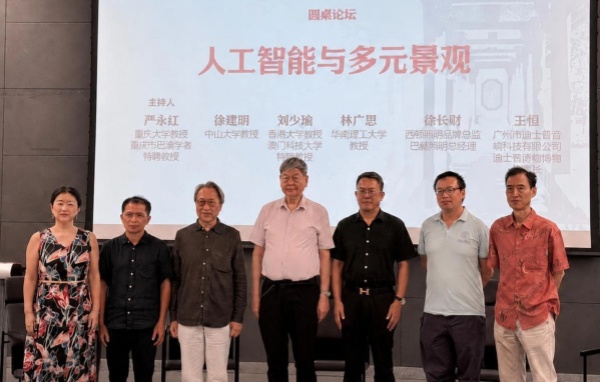
Three themed roundtable forums were held sequentially in the afternoon of the same day.
Forum 1: Traditional Culture and the Wisdom of Sound, Scent and Light Landscapes. Experts exchanged insights on multi-sensory wisdom in classical gardens, urban sonic landmarks, biological soundscapes and related topics.
Forum 2: Artificial Intelligence and Multi-Sensory Landscapes, presided over by Professor Yan Yonghong. Discussions centered on cutting-edge technological applications in the AI era, including multi-sensory experience design, intelligent lighting and neural perception.
Forum 3: Multi-Sensory Landscapes and Human Wellbeing, focusing on empirical research covering health-oriented multi-sensory research and design, community-based practices and forest environmental intervention.
This conference marks the first national-level specialized academic event dedicated to multi-sensory landscapes in China. In the future, the Task Force will continue to advance theoretical research, standard formulation and project implementation, facilitate integration between classical garden-making wisdom and modern technologies, break disciplinary boundaries between landscape architecture, architecture and lighting, and promote the translation of integrated multi-sensory landscape research into real-world industry practice.