
- News Center
Event news
AALD News
Asian Lighting Designers Salon
The 153rd AALD Salon "Coexistence of Light and Scenery" Successfully Held at South China University of Technology
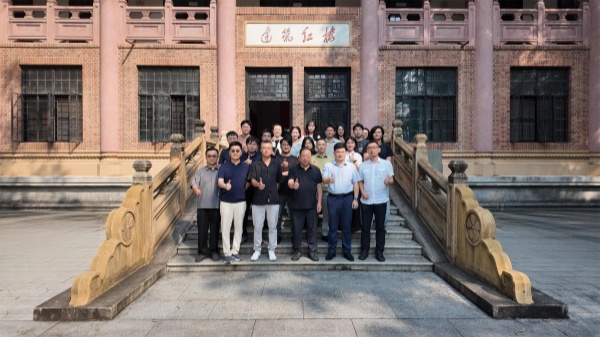
On October 14, 2026, the 153rd Asian Lighting Designers Salon (Guangzhou Stop) took place at the Red Building, School of Architecture, Wushan Campus of South China University of Technology (SCUT). Co-organized by the Asian Association of Lighting Designers (AALD) and the School of Architecture of SCUT, co-supported by the AI Lighting Workstation and New Shanshui Digital Technology, and undertaken by Yangguang Media and S.P.I Landscape Group, the event brought together university scholars, industry associations, landscape design institutions and representatives from lighting enterprises for in-depth discussions on AI-enabled full design workflows and industry-university-research collaborative talent cultivation.
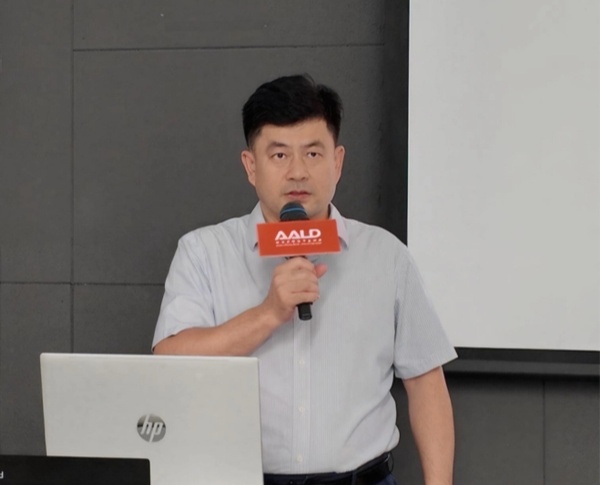
Ye Zhifeng
The salon kicked off with an opening address by Ye Zhifeng, Party Secretary of the School of Architecture, SCUT. He noted that AI technology is rapidly penetrating the entire design workflow, bringing new opportunities to the industry and prompting us to re-examine the boundaries of design and the orientation of design education. He expressed hopes that through deep integration of industrial resources, breaking disciplinary boundaries and pooling design strengths, participants can jointly explore the innovative value of AI empowering spatial design and translate industry-university-research collaboration into tangible talent development outcomes.
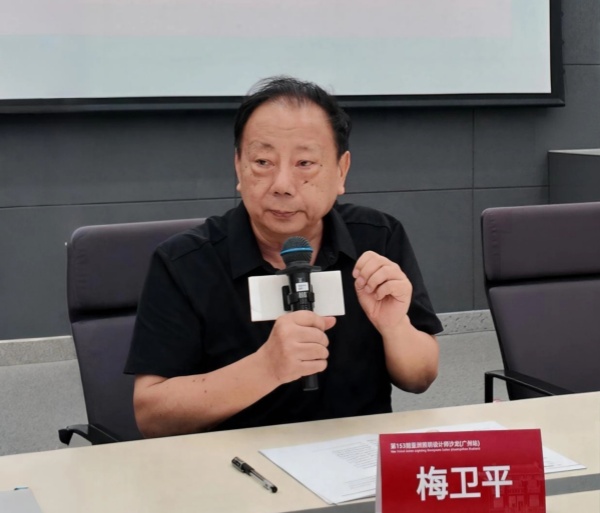
Mei Weiping
How should designers define their own value in the AI era? Mei Weiping, Founding Shareholder and Chairman of the Supervisory Board of S.P.I Landscape Group, believes that AI can help designers evolve from "skilled labour" to "talented professionals", and ultimately to "visionary creators". Designers should proactively embrace new-quality productive forces, refuse to become replaceable "skilled labour", and strive to be "visionary creators" who master AI and deliver value!
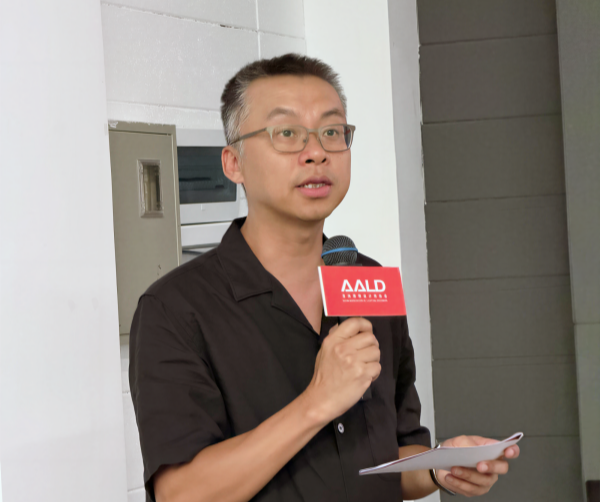
Su Ping
The first half of the event was hosted by Su Ping, Vice Dean of the School of Architecture, SCUT, while the second half was moderated by Ma Bin, Secretary-General of AALD. A ribbon-cutting ceremony was specially arranged for the **A·Station Future Design Talent Scholarship Programme**. Jointly launched by Zhongzhao Jinzhi and the School of Architecture, SCUT, the programme leverages the A·Station AIGC digital design platform to explore university-enterprise collaborative education for design majors. It introduces AIGC workflows, computing resources and industrial practice scenarios into campuses, helping students progress from "knowing software operations" to "mastering creative expression", and from "finishing assignments" to "solving real-world problems".
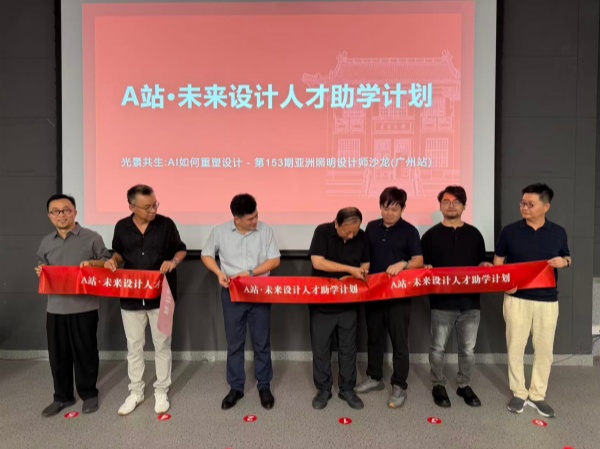
Ribbon-cutting Guests: Lai Wenbo, Su Ping, Ye Zhifeng, Mei Weiping, Feng Xiaoyang, Sun Xiaofeng, Ma Bin
Ye Zhifeng (Party Secretary), Su Ping (Vice Dean) and Associate Professor Lai Wenbo from the School of Architecture, SCUT; Mei Weiping, Founding Shareholder and Chairman of the Supervisory Board of S.P.I Landscape Group; Sun Xiaofeng, General Manager of New Shanshui R&D Center; Ma Bin, Secretary-General of AALD; and Feng Xiaoyang, lecturer from the School of Architectural Engineering, Guangdong Baiyun University, stepped onto the stage together to cut the ribbon for the programme launch.
During the presentation session, four speakers took the stage in turn, outlining practical pathways for integrating AI into the full design process, covering nightscape lighting, industry trends, landscape design workflows and tool implementation.
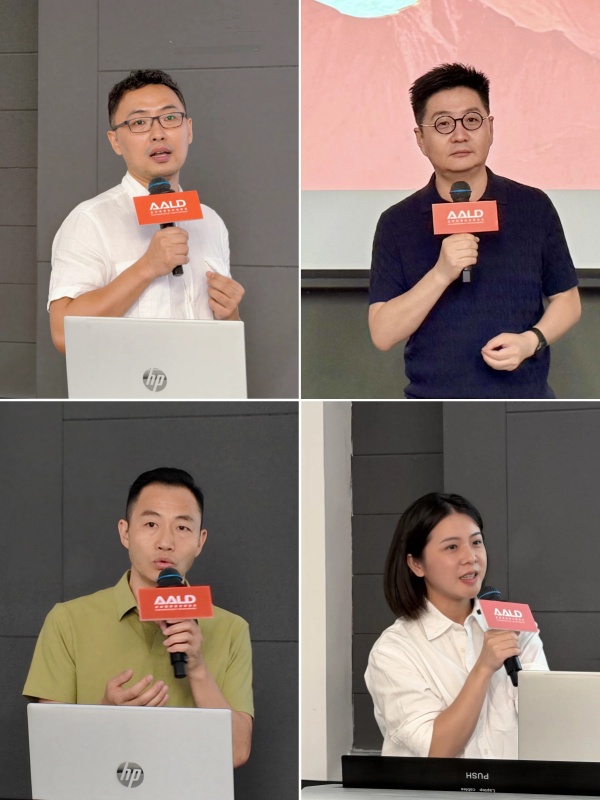
Speakers: Bian Yu, Ma Bin, Hu Shunhua, Chen Huijun
Bian Yu, Professor and Doctoral Supervisor of the School of Architecture, SCUT; Secretary-General Ma Bin; Hu Shunhua, Chief Engineer of New Shanshui R&D Center; and Chen Huijun, Lighting Intelligence Architect at Zhongzhao Jinzhi, delivered keynote presentations respectively. Qing Zhe, General Manager of Star-D Lighting, and Li Jinghan, Guangzhou Promotion Manager of CEDAR Lighting, attended the event.
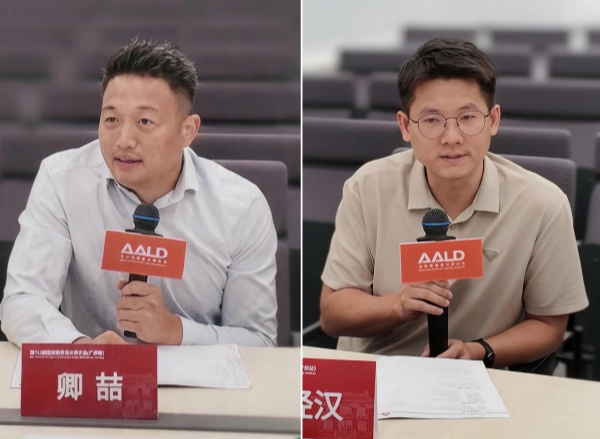
Qing Zhe, Li Jinghan
In the interactive discussion segment, guests, faculty and students engaged in dialogue around two core topics:
Topic 1: Amid industrial transformation, how can designers effectively balance AI tools and the value of design creation?
Topic 2: Under the industry-university-research collaboration model, how to integrate AI tools into design education to cultivate interdisciplinary talents suited for the AI era?
Guests from academia and enterprises shared insights from their respective perspectives, sparking lively on-site exchanges.
The event concluded successfully. Linking academia and industry through AI, the 153rd Asian Lighting Designers Salon has injected new momentum and vitality into the coordinated development of the design industry in Guangzhou and surrounding regions.